Why a galvanised metal garage stands up to the damp British climate
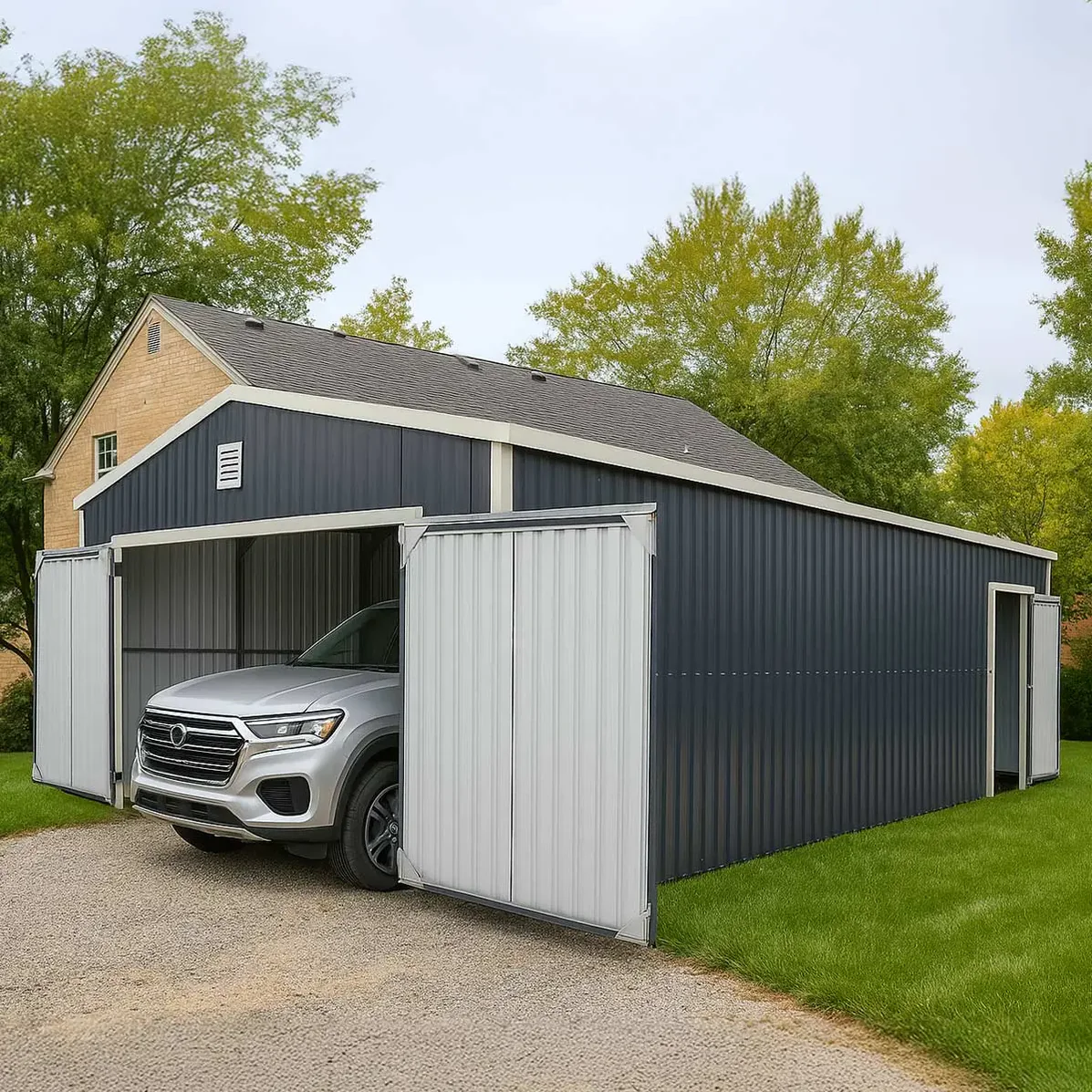
Across the United Kingdom, where gardens are modest and plots are tight, a metal garage offers secure, weatherproof room for a car, the bicycles and the tools that otherwise clutter a hallway.
Even in a warm summer the British climate stays damp, with humid air and frequent rain. That persistent moisture is the real adversary for any outdoor structure, and it explains why the material behind a metal garage matters more than its dry-weather appearance suggests.
The quiet chemistry that defeats rust
Painted steel rusts and timber rots because both rely on a surface barrier that, once breached, lets water reach what lies beneath. The frame of a metal garage works on a cleverer principle.
Galvanising bonds a layer of zinc to the steel. Zinc is more reactive than iron, so it corrodes sacrificially in place of the steel underneath. Think of it as a bodyguard that takes the hit; even where a panel is scratched, the surrounding zinc still protects the exposed metal electrically.
This is why a galvanised frame endures the constant damp where ordinary painted steel would streak with rust within a few seasons. The protection is built into the metal rather than brushed on top of it.
How a folded sheet becomes a strong panel
A flat sheet of thin steel flexes easily, yet the same sheet pressed into corrugations becomes remarkably rigid. The folds work like the fluting inside cardboard, raising stiffness without adding weight.
The ridges resist bending because the material is held away from the panel's centre line, so wind and snow loads are carried efficiently. It is geometry, not extra thickness, doing the heavy lifting.
Reading the shape of the roof
A metal garage is most usefully classified by roof form. An apex roof rises to a central ridge and sheds rain to both sides; because the panels lean against one another at that ridge, the roof needs no internal posts, leaving a clear span beneath.
A pent roof slopes one way only, suiting a lean-to against a wall but offering less headroom at the low edge. A lean-to shares a host wall entirely and is the most space-thrifty, though it depends on that wall for support.
•Apex: even drainage, full clear span, generous central height
•Pent: simple, compact, reduced headroom at one side
•Lean-to: space-saving, but tied to an existing wall
Doors that swing, and why the arc matters
Door type is the second great divider. Swing doors hinge outward on a pivot, sealing firmly and opening wide, but they need a clear arc in front to swing through.
Roller and sliding doors trade that arc for vertical or lateral travel, which helps on a cramped driveway, though they carry more moving parts. A sixteen-by-twenty-four-foot model with swing front and side doors and a peak height of one hundred and six inches gives both a wide vehicle entrance and a convenient pedestrian way in.
A practical fit for a British plot
Consider a household in a Yorkshire suburb with a narrow garden and a classic car needing dry storage. A metal garage with an apex roof and a clear span lets the car sit centrally with workbenches along the walls, while the side door allows quick access to tools without rolling back the main doors.
Understood as a system of sacrificial zinc, folded steel and a ridge that frees the interior, a metal garage becomes more than a metal box; it is a considered answer to wet ground, scarce space and the need to keep belongings secure and dry.
There are years that ask questions and years that answer. You never really understand a person until you consider things from his point of view. She wasn't doing a thing that I could see, except standing there leaning on the balcony railing.