Smart Home Privacy: Why Local Data Processing Matters More Than Ever
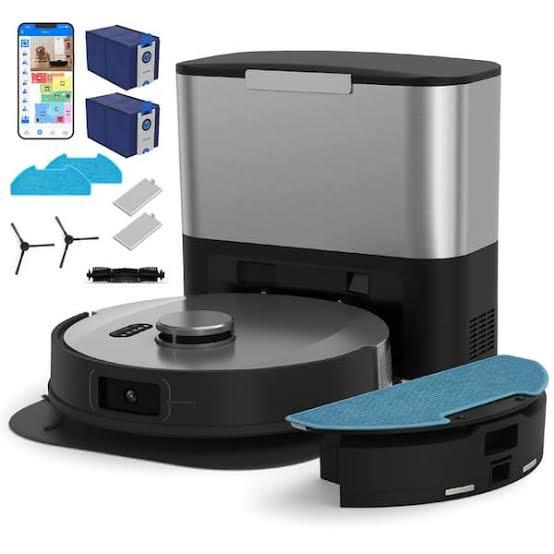
Smart homes are becoming more capable every year. Cameras recognize visitors, thermostats learn household routines, speakers respond to voice commands, and robotic vacuums can map rooms and navigate around furniture with impressive accuracy.
But as these devices become smarter, consumers are beginning to ask a different question: what happens to all the information they collect?
For many connected products, functionality depends heavily on cloud services. Data generated inside the home may be transmitted through the internet to remote servers where it is processed, stored, or used to provide additional features. This model can be convenient, but it also raises legitimate questions about privacy, security, and data minimization.
An alternative approach is becoming increasingly important: processing more information directly on the device.
For smart-home users concerned about privacy, the difference between local and cloud processing can matter just as much as the features printed on the box.
The Hidden Data Layer of the Smart Home
Every connected device creates some form of digital footprint.
Some of that information is relatively harmless, such as software versions or battery status. Other information can reveal significantly more about a household.
Consider a robotic vacuum. To navigate efficiently, modern robots may create maps of rooms, detect obstacles, remember cleaning zones, and store cleaning schedules. Depending on the technology being used, the device may also rely on cameras or other sensors to understand its surroundings.
None of these technologies are inherently problematic. The privacy question is what happens to the information afterward.
Does a map remain on the robot, or is it uploaded to a remote server?
Are images processed locally, or transmitted through the internet?
How much information does the manufacturer actually need in order to provide the service?
These questions reflect an important principle in modern data protection: data minimization.
Instead of collecting everything simply because technology makes it possible, privacy-conscious systems attempt to collect and transmit only the information required for a specific function.
Local Processing vs. Cloud Processing
Cloud computing has transformed consumer technology. It allows relatively small devices to access powerful remote infrastructure and enables features such as account synchronization, remote controls, software updates, and integrations with other services.
However, cloud dependence also means information has to leave the device.
A typical cloud-dependent process might look something like this:
Device → home router → internet → company server → application.
The more information that travels through this chain, the more infrastructure is involved in handling it.
Local processing changes that model.
Instead of continuously sending raw information to remote infrastructure, the device performs more of its work internally. Certain information may remain stored directly on the product while only essential commands or status information need to travel through the network.
This approach offers several potential privacy advantages.
Sensitive information can remain closer to where it was created. There is less unnecessary data moving between networks and remote systems. And the device may be less dependent on cloud infrastructure for its core functionality.
Local processing does not necessarily mean that a product is completely offline. A connected device can still communicate with an app or online service while keeping more sensitive information on the device itself.
The important distinction is what gets transmitted and what does not.
How bObsweep Approaches Privacy Inside the Home
Robotic vacuum manufacturer bObsweep provides an interesting example of how local processing can be incorporated into smart-home technology.
Modern robotic vacuums need to understand their surroundings to clean effectively. They may identify walls, furniture, rooms, cleaning zones, and obstacles as they move through a home.
That creates useful information - but potentially sensitive information as well.
bObsweep states that map information and cleaning schedules on supported models are stored locally on the robot rather than being stored in the mobile application or continuously uploaded as household mapping data.
The company has also placed particular emphasis on how visual information is handled.
Some advanced robots use visual systems to recognize objects and navigate more intelligently. According to bObsweep's product and privacy information, compatible models are designed so that images of the user's home are not transmitted as image or video content.
That distinction is important.
A robot can use sensors to understand its surroundings without necessarily turning everything it observes into cloud-hosted media.
From a privacy perspective, this follows a straightforward principle: a device should be able to use information to perform its job without automatically turning that information into data that needs to leave the home.
Privacy Can Also Reduce Unnecessary Network Traffic
Privacy-focused design can have another practical consequence: less unnecessary traffic moving across the household internet connection.
There is a major difference between a device occasionally exchanging commands and status information and a device continuously uploading high-bandwidth content such as images or video.
Smart-home bandwidth problems are usually caused by devices that regularly transmit or consume large amounts of data. Security cameras, for example, may continuously upload video streams to cloud storage, particularly when users enable high-resolution recording.
A robotic vacuum does not need this type of constant high-bandwidth connection to perform its primary task.
Keeping mapping information locally and avoiding continuous image or video uploads means there is substantially less heavy data that needs to travel outside the device. This helps explain why bobsweep does not slow down your internet with continuous streams of household mapping imagery or video content.
This does not mean the robot never communicates through the internet. Connected functions may still require communication between the robot, app, and online services.
The key difference is that ordinary device communication is very different from constantly uploading large media files.
Privacy Does Not Mean Zero Connectivity
It is important to distinguish privacy-focused design from complete isolation from the internet.
A modern connected product may still process technical information required to operate its services. This can include device identifiers, application information, IP addresses, diagnostic information, account information, or usage data.
bObsweep's privacy documentation acknowledges this distinction.
Some information is still required to support connected functions, account services, troubleshooting, software functionality, and other online features.
That is normal for many smart products.
The more useful privacy question is therefore not simply:
“Does this device connect to the internet?”
A better question is:
“What information actually needs to leave the device when it connects?”
A thermostat sending a temperature reading is different from a camera continuously uploading video. Similarly, a robotic vacuum receiving a command from an app is different from sending detailed visual records of every room it enters.
Understanding these distinctions helps consumers make better decisions about the technology they bring into their homes.
What Privacy-Conscious Consumers Should Look For
Consumers do not need to be cybersecurity experts to evaluate a smart device's approach to privacy.
A few basic questions can reveal a great deal.
First, determine whether sensitive information is processed locally or remotely. If a product creates maps, recordings, images, or behavioral data, find out where that information is stored.
Second, consider whether every connected feature is actually necessary. Some smart devices continue performing their primary function even without constant internet access, while others become almost unusable without their cloud service.
Third, look at how transparent the manufacturer is about its data practices. Privacy policies should explain what information is collected, why it is needed, and how it may be used.
Consumers should also examine optional integrations. Voice assistants, third-party platforms, and additional cloud services can be useful, but every integration may introduce another party into the data chain.
Finally, users should keep devices updated. Privacy-friendly architecture is valuable, but basic security practices such as software updates and strong account credentials remain important.
Smarter Devices Should Not Require More Data
The smart-home industry has spent years competing over which device can collect more information, recognize more objects, and connect to more services.
The next stage may involve asking a different question: how much of that data actually needs to leave the home?
Local processing offers one possible answer.
A device can use sophisticated sensors, mapping systems, and automation while still limiting the amount of sensitive information transmitted to remote infrastructure.
bObsweep's approach to local map storage and restricted transmission of visual information illustrates how that principle can work in a real consumer product.
As smart devices become increasingly embedded in everyday life, privacy will depend less on whether technology collects information at all and more on how responsibly that information is handled.
The smartest home may ultimately be the one where devices can learn enough to be useful - without unnecessarily sharing everything they learn.