Metal Detecting Pouch vs. Backpack: Which Is Better?
Metal detecting is more than a hobby for many Americans it’s a treasure hunt that blends adventure, history, and the thrill of discovery. Whether you’re scouring Florida beaches, exploring Civil War sites in Virginia, or roaming the open fields of the Midwest, your gear can make or break the experience. One critical choice every detectorist faces is how to carry their tools, finds, and essentials: a metal detecting pouch or a backpack? Both have their fans, but which is better for you? This guide dives deep into the pros, cons, and practical considerations to help you decide, tailored to the diverse terrains and preferences of U.S. detectorists.
What Is a Metal Detecting Pouch?
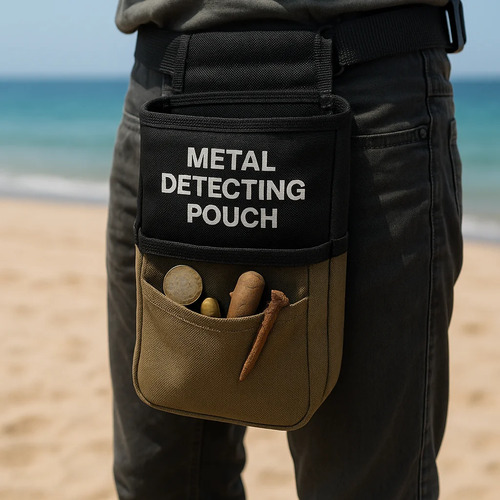
A metal detecting pouch is a compact, wearable bag, typically worn on a belt or around the waist, designed to hold essential tools and finds. Think of it as your go to sidekick for quick hunts. Pouches are usually made of durable materials like nylon or canvas, with multiple compartments for organizing items like a pinpointer, digging trowel, or small finds. Popular models in the U.S., like those from Garrett or Minelab, often feature rugged zippers and loops for attaching tools.
Pouches shine for their simplicity. Imagine you’re at a local park in California, swinging your detector for a couple of hours. A pouch keeps your essentials gloves, a small shovel, and a finds bag right at your hip, easy to grab without breaking your rhythm.
What Is a Metal Detecting Backpack?
A metal detecting backpack, on the other hand, is a larger, shoulder worn solution built for bigger hauls and longer trips. These backpacks often have padded straps, multiple compartments, and sometimes specialized pockets for detectors or shovels. Brands like Nokta and XP offer backpacks tailored for detectorists, with features like waterproof linings or tool holsters.
Picture a full day expedition in the forests of Pennsylvania, where you’re carrying water, snacks, extra batteries, and a full-size shovel. A backpack distributes the weight across your shoulders, letting you trek longer without feeling bogged down.
Pros and Cons of a Metal Detecting Pouch
Pros
- Lightweight and Compact: Most pouches weigh under 1 pound, making them ideal for short hunts or when you want to move fast.
- Quick Access: Need your pinpointer or trowel? It’s right at your waist, no need to stop and rummage.
- Affordable: Prices typically range from $15 to $50, a budget-friendly option for beginners.
- Great for Tight Spaces: In dense brush or urban parks, a pouch won’t snag like a bulky backpack.
Cons
- Limited Capacity: You’re restricted to essentials think a pinpointer, small shovel, gloves, and a finds bag. No room for water bottles or extra gear.
- Comfort Issues: A fully loaded pouch can dig into your waist during long sessions, especially if you’re bending and digging frequently.
- Less Protection: Most pouches aren’t fully waterproof, so your finds might get wet on a rainy day in Oregon.
Best for: Short hunts (1–3 hours), urban parks, or beach detecting where you need agility and minimal gear. A detectorist in Miami combing the sand for coins and jewelry would find a pouch perfect.
Pros and Cons of a Metal Detecting Backpack
Pros
- High Capacity: Backpacks can hold everything detector, shovel, water, snacks, first aid kit, and more. Some models fit up to 30 liters of gear.
- Better Weight Distribution: Padded shoulder straps and back panels spread the load, reducing strain during 5+ hour hunts.
- Durability: Many backpacks, like those from Quest or Kellyco, use heavy-duty materials and waterproof coatings, ideal for rugged terrains like the Rocky Mountains.
- Extra Features: Look for tool loops, padded detector compartments, or hydration pack compatibility for long treks.
Cons
- Bulkier: A backpack can feel cumbersome in tight spaces, like overgrown trails in Georgia’s woodlands.
- Slower Access: Digging through compartments takes time, which can slow you down when you’re pinpointing a target.
- Higher Cost: Quality backpacks range from $50 to $150, a bigger investment than pouches.
Best for: Long expeditions, remote locations, or when you need to carry extra supplies, like on a multi-day hunt in Nevada’s goldfields.
Key Factors to Consider When Choosing
To pick the right option, think about your detecting style, the terrain you frequent, and your priorities. Here’s a detailed breakdown of the key criteria:
Capacity and Organization
- Pouch: Typically holds 5–10 small items. Most have 2–4 compartments, with dedicated pockets for a pinpointer or finds. Great for quick organization but limited if you need food, water, or spare detector batteries.
- Backpack: Offers 20–30 liters of space, with multiple compartments for tools, finds, and extras like a jacket or sunscreen. Some models have specific pockets for detectors or shovels, keeping everything tidy. Ideal for detectorists in rural Texas carrying gear for all-day hunts.
Example: On a beach in New Jersey, a pouch holds your scoop, pinpointer, and finds bag. But for a Civil War relic hunt in Tennessee, a backpack lets you pack a full-size shovel, water, and a first aid kit.
Comfort and Ergonomics
- Pouch: Lightweight but can become uncomfortable if overloaded. Waist straps may chafe during long sessions or frequent bending, a common issue when digging in hard-packed Midwest soil.
- Backpack: Padded straps and back panels make backpacks more comfortable for extended use. Look for adjustable straps and breathable mesh to stay cool in humid Florida summers. However, heavy loads can strain shoulders over time.
Example: A detectorist in a crowded Chicago park prefers a pouch for its low profile, while someone hiking Arizona’s deserts chooses a backpack for comfort on long treks.
Mobility and Maneuverability
- Pouch: Excels in tight spaces. Whether you’re navigating thorny brush in Oregon or a busy beach in California, a pouch stays out of the way, letting you swing your detector freely.
- Backpack: Can feel restrictive in dense vegetation or urban settings. A backpack might snag on branches in Michigan’s forests, slowing you down.
Example: A pouch is perfect for a quick hunt in a New York City park, while a backpack suits a multi-mile trek through Montana’s open fields.
Durability and Materials
- Pouch: Often made of nylon or canvas, with sturdy zippers. Some models, like those from Black Ada, offer water resistance, but few are fully waterproof. Check for reinforced stitching to handle rough use in rocky Utah terrains.
- Backpack: Typically built with tougher materials like 1000D nylon or ripstop fabric. Many, like the XP Backpack 280, have waterproof linings, perfect for rainy hunts in Washington state. Look for YKK zippers for longevity.
Tip: For beach detecting, choose a pouch or backpack with rust-resistant zippers to withstand salty air.
Safety and Security of Finds
- Pouch: Small finds bags or zippered compartments keep coins and relics safe, but delicate items like old buttons or jewelry might get scratched without padded pockets.
- Backpack: Offers more secure storage with padded or lined compartments. Some models have lockable zippers, a plus for valuable finds in high-traffic areas like public beaches.
Example: A pouch works for casual coin shooting in Ohio, but a backpack with padded pockets is better for protecting fragile relics in historical Virginia sites.
Additional Features
- Pouch: Look for loops to secure a shovel or pinpointer, and MOLLE webbing for attaching extra gear. Some pouches, like the Nokta Finds Pouch, have drainage holes for beach use.
- Backpack: Features like hydration bladder compatibility, external tool holsters, or detector-carrying straps add versatility. The Garrett All-Purpose Backpack, for instance, has a dedicated detector compartment.
Example: A pouch with a shovel loop is handy for quick digs in Florida, while a backpack with a hydration system suits long hunts in Arizona’s heat.
Cost
- Pouch: Budget-friendly, with quality options from $15 (basic nylon pouches) to $50 (premium models with extra features).
- Backpack: More expensive, ranging from $50 (entry-level) to $150 (high-end models with waterproofing and padding).
Tip: Beginners on a budget can start with a pouch and upgrade to a backpack as their hunts get longer or more gear-intensive.
Side-by-Side Comparison
|
Feature |
Pouch |
Backpack |
|
Capacity |
5–10 small items |
20–30 liters, full gear |
|
Weight |
Under 1 lb |
2–5 lbs (loaded) |
|
Access Speed |
Fast, at your hip |
Slower, requires rummaging |
|
Comfort (Long Hunts) |
Can chafe, less supportive |
Padded, better weight distribution |
|
Mobility |
High, low-profile |
Lower, bulkier |
|
Durability |
Good, but less weatherproof |
Excellent, often waterproof |
|
Finds Protection |
Basic, limited padding |
Padded, secure compartments |
|
Cost |
$15–$50 |
$50–$150 |
Recommendations for Different Types of Detectorists
Beginners
If you’re just starting out, perhaps hitting local parks in Ohio or beaches in South Carolina, a pouch is often the best choice. It’s affordable, easy to use, and holds the essentials pinpointer, trowel, gloves, and a finds bag. A $20–$30 pouch like the Garrett Camo Finds Pouch gives you everything you need without overwhelming you with extra space or cost.
Scenario: A newbie in a suburban Chicago park wants to keep things simple. A pouch lets them focus on learning their detector without juggling extra gear.
Hobbyists
Enthusiasts who detect regularly, maybe splitting time between beaches and fields, might use both. A pouch is great for quick 1–2 hour hunts in urban areas like Los Angeles, while a backpack suits longer trips to rural spots like Kentucky’s farmlands. Consider a mid-range backpack ($50–$80) like the Quest Metal Detecting Backpack for versatility.
Scenario: A hobbyist in North Carolina hits the beach in the morning and a historical site in the afternoon. They use a pouch for the beach and switch to a backpack for the relic hunt, packing extra tools and water.
Professionals
Serious detectorists, like those hunting Civil War relics in Virginia or gold in Nevada, need a backpack. The ability to carry a full-size shovel, multiple batteries, food, and water is critical for multi-day expeditions. Invest in a high-end model ($100–$150) like the XP Backpack 280, designed specifically for detectorists with rugged terrain in mind.
Scenario: A pro in Montana’s mountains needs to carry a detector, shovel, GPS, and supplies for a 3-day hunt. A backpack keeps everything secure and comfortable.
Tips for Choosing the Right Model
When shopping for a pouch or backpack, keep these tips in mind to match your needs as a U.S. detectorist:
- Check Material Quality: Look for 600D–1000D nylon or ripstop fabric for durability. For beach hunts, ensure zippers are rust-resistant to handle salty air in places like Florida or California.
- Prioritize Accessibility: Pouches should have wide openings or external loops for quick tool access. Backpacks need well-organized compartments to avoid digging through clutter.
- Test Comfort: For pouches, try adjustable belts to prevent slipping. For backpacks, look for padded straps and breathable back panels, especially for hot climates like Texas or Arizona.
- Consider Terrain: Waterproof or water-resistant gear is a must for rainy areas like Washington or muddy fields in Illinois. For urban hunts in New York, prioritize compact designs.
- Look for Specialized Features: Pouches with drainage holes (e.g., Nokta Finds Pouch) are great for beach detecting. Backpacks with detector compartments or hydration compatibility (e.g., Minelab Pro-Find Backpack) suit long treks.
- Set a Budget: A $30 pouch is fine for casual hunts, but spending $100 on a backpack can pay off for frequent, demanding trips.
Real-Life Scenarios
- Beach Detecting in Florida: You’re on Miami Beach, hunting for coins and jewelry. A pouch like the Minelab Finds Pouch holds your sand scoop, pinpointer, and finds bag, keeping you light and nimble as you dodge sunbathers and waves.
- Relic Hunting in Virginia: You’re exploring a Civil War site, digging deep for buttons and bullets. A backpack like the XP Backpack 280 carries your detector, full-size shovel, water, and padded finds bags to protect delicate relics.
- Urban Park in Chicago: A quick after-work hunt calls for a pouch. You grab your Garrett Camo Finds Pouch, toss in a trowel and pinpointer, and move freely through crowded spaces.
- Desert Expedition in Nevada: A multi-day gold hunt requires a backpack. The Quest Metal Detecting Backpack holds your detector, water, GPS, and snacks, with padded straps to keep you comfortable in the heat.
Choosing between a metal detecting pouch and a backpack comes down to your detecting style, terrain, and needs. A pouch is your best bet for short, agile hunts in urban parks or beaches, offering quick access and a low profile at a budget-friendly price. A backpack, meanwhile, is ideal for long expeditions or remote locations, providing ample space and comfort for carrying extensive gear. American detectorists face diverse conditions from Florida’s sandy shores to Montana’s rugged mountains so consider your typical hunt duration, gear load, and environment. Whether you’re a beginner coin shooting in Ohio or a pro relic hunting in Tennessee, there’s a perfect solution for you.