From RFID Chip to Digital Record: How Casino Table Data Gets Its Meaning
An RFID casino chip can carry an electronic identifier, but that identifier is not automatically a complete gaming record.
When a chip enters the reading area of a connected casino table, the RFID equipment may detect its registered identity. At that moment, however, the system still needs to determine where the chip was detected, when the event occurred and how the detection relates to the current table workflow.
The practical value of RFID therefore comes from more than the chip itself. It depends on how physical chip activity is combined with table context, software rules and authorized operational records.
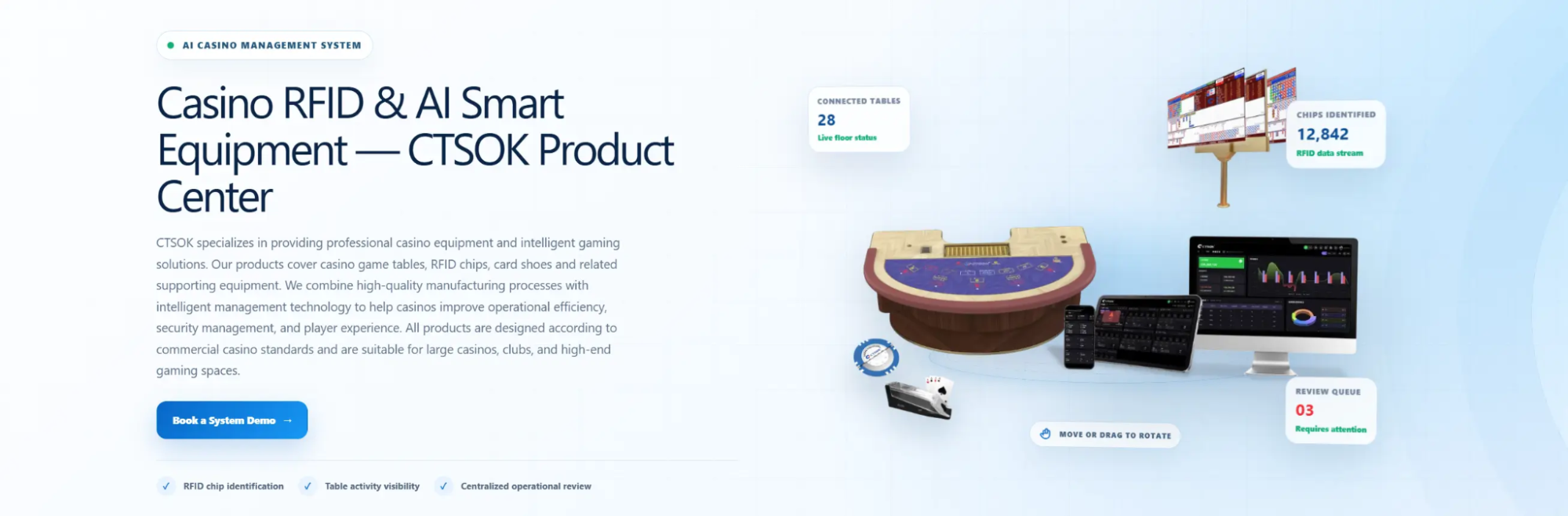
An RFID-enabled table provides the physical environment in which chip identities are associated with configured table positions. Image: CTSOK.
An RFID Chip Provides Identity, Not Complete Meaning
A conventional casino chip is generally recognized through visible characteristics such as its color, printed denomination and design. An RFID-enabled chip adds an electronic component that can respond when it enters a compatible reading field.
The reader can obtain the chip’s electronic identifier. The connected system can then compare that identifier with an authorized chip record.
Depending on the casino’s configuration, the registered information may indicate:
- The chip’s internal identification number
- Its assigned denomination
- Its activation status
- Its chip category
- The casino or property to which it belongs
- Whether it is recognized by the configured system
- Whether it requires further review
This information helps the system distinguish registered chips from identifiers that are unknown, inactive or inconsistent with the expected configuration.
However, the RFID identifier alone does not explain what the chip was doing.
It does not independently establish whether the chip represented a wager, remained in a chip tray, was being transferred between controlled locations or entered a reading zone during another authorized procedure. Operational meaning must be added by the surrounding system.
The Reading Zone Adds Location
The next layer of meaning comes from the reading zone.
RFID antennas or reader components can be installed beneath or around defined parts of a gaming table. These areas may correspond to player betting positions, table inventory locations or other controlled sections of the layout.
When the system detects a chip, it can associate the electronic identifier with the configured zone that produced the read.
A basic record can then answer two questions:
- Which registered chip was detected?
- Where was it detected?
This relationship between identity and location is essential. Without accurate zone assignment, the system may recognize the correct chip but associate it with the wrong table position.
For this reason, RFID table configuration is not simply a matter of maximizing reading distance. A broad reading field may create overlap between adjacent areas. In a table environment, controlled coverage and separation between zones may be more important than detecting a chip from farther away.
The physical table also influences this process. Antenna placement, table materials, surrounding electronic equipment and the distance between betting positions can affect how reading areas behave. Final testing must therefore use the actual installed table configuration.
Time Places the Detection in a Sequence
Location still does not create a complete operational event. The system must also determine when the chip was detected.
A timestamp places the electronic read within a sequence of table activity. This helps authorized users compare one event with earlier or later events recorded by the system.
For example, the same chip identifier may appear during different stages of a controlled workflow. Without time information, those detections would be difficult to organize or distinguish.
Time data can help establish:
- When the reader first detected the chip
- When its status or location changed
- Which table session was active
- Whether the event appeared before or after another recorded action
- When a user reviewed or adjusted the associated record
The timestamp must be interpreted together with the system configuration. Differences in device clocks, network settings or time-zone configuration can make records harder to compare. Connected equipment should therefore use an approved and consistent time reference.
Table Context Turns a Read Into an Operational Record
A meaningful casino table record normally requires several pieces of context.
Depending on the installed equipment and software, the data path may include:
RFID identifier → Reading zone → Table identity → Time → Workflow stage → System rule → Authorized record
Each stage adds information that the electronic chip cannot provide by itself.
The table identity establishes which operating location produced the read. The reading zone narrows that location to a configured area. The timestamp places the detection in sequence. The active workflow provides the operational context in which the event occurred.
Software rules then determine how the collected information should be classified, displayed or retained.
For example, a system may need to determine whether:
- The identifier belongs to the authorized chip database
- The chip is active within the current operating environment
- Its registered category is permitted in that location
- The event occurred during the expected workflow stage
- The detection requires an alert or manual review
- The record should be associated with a specific table session
The exact behavior depends on the approved installation. RFID data is therefore not meaningful in isolation; it becomes useful when the system connects it with defined operational rules.
A Detected Chip Is Not Automatically a Confirmed Wager
One of the most important distinctions in RFID table management is the difference between detecting a chip and confirming the meaning of its presence.
A reader may establish that a registered chip entered a configured zone. That information alone does not necessarily prove:
- Who physically placed the chip
- Whether the dealer accepted it as a wager
- Which game outcome applied
- Whether the chip remained in the same position
- Why it was later moved
- Whether a collection or payout was correct
- Whether an unusual event was intentional
Those conclusions require additional context.
The system may need information from the game workflow, table-side equipment, dealer actions or authorized manual review. When an incident is investigated, casino personnel may also compare electronic records with surveillance footage and established operating procedures.
RFID data can narrow the event that requires attention. It does not remove the need for human interpretation.
Software Rules Determine How Data Is Classified
Once the system has received an RFID identifier and its table context, software rules determine how the information is organized.
A casino may configure different statuses for different chip categories. For example, cash-value chips, promotional chips, inactive chips and test chips may need to be distinguished in the management platform.
This classification is not created by the radio signal. It comes from the authorized database and the operating rules connected with the identifier.
The system may therefore compare a detected ID with fields such as:
- Chip denomination
- Chip type or category
- Current status
- Authorized property
- Issue or registration record
- Permitted operating area
- Exception status
This distinction matters because two RFID chips can respond to the same type of reader while having different operational purposes.
Electronic compatibility tells the reader that a tag can be detected. Database registration and system rules determine how the identifier should be treated.
Connected Equipment Adds More Context
The reader is only one component in a connected table environment.
Depending on the installation, a table may also use:
- A dealer terminal
- An electronic card shoe
- A table control interface
- A result or roadmap display
- A chip tray or inventory-reading area
- A local processing unit
- Centralized management software
These devices do not all perform the same function. Their purpose is to contribute different information to the overall workflow.
The RFID equipment identifies registered chips within configured reading areas. The dealer terminal may provide table or session context. Other table-side devices can contribute information relevant to the installed workflow. The management platform receives, organizes and presents the authorized records.
For operators evaluating an integrated environment, CTSOK Casino Solution connects RFID-enabled chips, smart table equipment and management software within a configurable casino technology framework.
The capabilities of an individual deployment depend on its selected hardware, software modules, operating procedures and integration requirements.
The Management Platform Organizes the Record
The management platform is where individual detections can be converted into records that authorized personnel can retrieve and review.
The management layer organizes data received from connected tables and authorized operating equipment. Image: CTSOK.
A useful record should preserve enough context to explain where its information came from.
Depending on the configuration, authorized users may need to review:
- The detected chip identifier
- The chip’s registered status
- The originating table
- The configured reading zone
- The event timestamp
- The associated table session
- The relevant workflow stage
- Any exception status
- Authorized manual actions
- Later corrections or review notes
A dashboard may summarize this information, but the visible summary should remain connected to its underlying source events.
Operators should be able to select controlled test events and trace them from the physical table to the corresponding management record. This confirms that the system is not merely displaying data—it is preserving the correct relationship between identity, location, time and workflow.
Manual Adjustments Need Their Own Context
No operational system can assume that every event will be processed without exception.
Equipment interruptions, incorrect configurations and unusual table situations may require authorized personnel to review or adjust a record. These actions should not erase the distinction between information collected automatically and information entered later by a user.
Where supported by the configured platform, an adjustment history may identify:
- The original system record
- The account that made the change
- The time of the adjustment
- The reason entered for the change
- The value before the adjustment
- The value after the adjustment
- Any required approval
This creates accountability without treating automation as infallible.
An electronic record becomes more reliable when reviewers can understand both the original source event and any later human action associated with it.
Permissions Determine Who Can Use the Data
Meaningful data also requires controlled access.
Dealers, supervisors, cage personnel, security teams, compliance staff and technical administrators do not necessarily need the same system functions.
A role-based configuration may separate permission to:
- View live table information
- Review historical events
- Register or deactivate chips
- Acknowledge exceptions
- Enter a manual correction
- Export reports
- Modify table settings
- Manage user accounts
The presence of detailed data does not mean every employee should be able to view or change it.
Testing should verify that each account can access the functions required for its role while restricted functions remain unavailable. Access controls are part of the operational meaning of a record because they define who is authorized to interpret, approve or modify it.
Data Quality Begins at the Table
It is easy to think of data quality as a reporting problem. In connected casino operations, it begins much earlier.
A record may be incomplete or misleading when:
- A chip is assigned to the wrong database entry
- A reading zone overlaps with a neighboring position
- The table identity is configured incorrectly
- Device clocks are inconsistent
- The active session is not defined correctly
- A network interruption separates events from their context
- A user applies an incorrect manual adjustment
A polished dashboard cannot repair source data that was incorrectly identified or classified.
For this reason, system acceptance testing should examine the complete data path rather than checking only whether the RFID reader responds.
Operators should confirm that:
- Registered chips are detected consistently.
- Each read is assigned to the intended zone.
- The record contains the correct table identity.
- Timestamps follow the approved configuration.
- Workflow stages are represented correctly.
- Exceptions receive the expected status.
- User permissions follow assigned responsibilities.
- Reports can be traced back to controlled source events.
From Electronic Identity to Operational Understanding
RFID technology gives a casino chip an electronic identity that compatible equipment can detect.
The reading zone adds location. The timestamp adds sequence. The table configuration adds operating context. Software rules add classification. Connected devices contribute additional information, while the management platform organizes the resulting records for authorized review.
This is how a simple electronic response becomes useful operational data.
The value is not contained in the chip identifier alone. It comes from the chain of controlled relationships built around that identifier.
A casino table system produces meaningful digital records only when identity, location, time, workflow and authorization remain correctly connected from the physical table to the management platform.
Frequently Asked Questions
Does an RFID chip store the complete history of a casino game?
Not necessarily. An RFID component provides an electronic identifier and may support associated registration information. Table history and operating context are generally created and maintained by the connected system.
Can a reader identify where a chip was detected?
The system can associate a read with the reader or configured reading zone that produced it. Accurate location assignment depends on antenna placement, zone configuration and final installation testing.
Does detecting a chip prove that a wager was accepted?
No. Detection establishes that an electronic identifier entered a compatible reading environment. Confirming the operational meaning of that event requires table and workflow context.
Why does the system need a chip database?
The database connects the detected identifier with authorized information such as denomination, status, category and permitted operating environment.
Can RFID records replace surveillance review?
No. RFID records provide an additional source of structured information. They may help authorized personnel locate and examine an event, but they do not independently explain every physical action or intention at the table.